
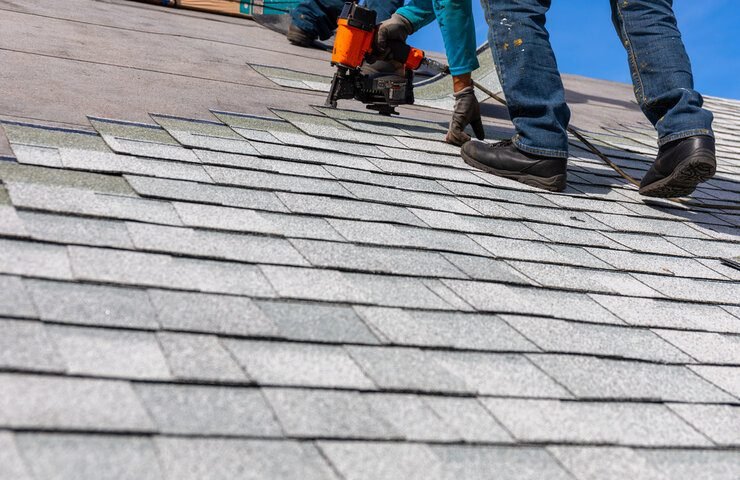
Roof installation errors can compromise the long-term performance of any commercial or multi-family building. In Brownstown and throughout Southeast Michigan, harsh winters, wind-driven rain, and temperature swings expose even minor roofing flaws quickly. Understanding how to identify poor roof installation in Brownstown is critical for developers, property owners, and general contractors who want to protect their investments and maintain structural integrity.
For large-scale projects such as apartment complexes, hospitality developments, and commercial buildings, roof performance is directly tied to the quality of structural framing beneath it. While shingles and membranes are visible components, the underlying framing system often determines whether a roof will last 30 years or fail within five. Improper structural wood framing, misaligned trusses, and insufficient bracing can all contribute to premature roof deterioration.
Kincaid Construction Company is a commercial framing and rough carpentry contractor serving Southern California. Although based in Southern California, the principles of proper structural framing and installation standards apply nationwide. Developers and builders across the country face similar challenges when poor roof installation stems from inadequate structural wood framing. Recognizing early warning signs helps prevent costly repairs, litigation, and structural compromise.
Below, we break down the most common indicators of poor roof installation, focusing on structural issues that often begin beneath the surface.
Signs of Poor Roof Installation in Brownstown
Roof installation problems rarely appear overnight. In Brownstown’s climate, freeze-thaw cycles and heavy snow loads accelerate visible symptoms, making it easier to spot underlying installation deficiencies. The earlier these warning signs are identified, the less likely they are to escalate into major structural repairs.
A poorly installed roof often shows distress patterns within the first few seasons. These issues can stem from improper decking attachment, incorrect nail placement, substandard flashing techniques, or flawed structural framing beneath the deck. On commercial buildings, such defects may compromise tenant safety and building code compliance.
Common early signs of poor roof installation include:
- Shingles lifting or curling shortly after installation
- Uneven roof lines visible from street level
- Persistent leaks around penetrations
- Soft or spongy roof decking under foot traffic
- Excessive ice dams during winter
In multi-family and hospitality developments, these warning signs can impact multiple units at once. For developers managing large portfolios, overlooking one compromised roof may lead to cascading water intrusion across several floors. Structural framing misalignment often plays a key role, particularly if trusses were improperly spaced or inadequately braced.
Poor workmanship also reveals itself in inconsistent fastener patterns. When decking panels are not properly secured to structural framing members, movement occurs under load. This movement transfers stress to shingles and flashing systems, eventually leading to separation and leaks. Over time, even minor deviations from framing specifications can translate into major roofing failures.
Additional red flags include:
- Decking seams that telegraph through roofing materials
- Visible dips between trusses or rafters
- Premature granule loss on asphalt shingles
- Gaps at ridge caps or valley intersections
When these symptoms appear in Brownstown properties, they warrant immediate evaluation by structural and roofing professionals. Addressing framing issues early can prevent full roof replacement later.
Uneven Shingles and Visible Roof Sagging
One of the most noticeable signs of poor roof installation in Brownstown is uneven shingle alignment or visible sagging across the roof plane. These issues often indicate deeper structural framing deficiencies rather than surface-level cosmetic flaws.
Shingles should lie flat and create uniform lines across the entire roof surface. When waves, ripples, or dips appear, the cause may be improper decking installation or framing inconsistencies beneath the sheathing. In commercial structures, these irregularities may span large areas, making the issue more pronounced.
Visible sagging can result from:
- Undersized rafters or trusses
- Incorrect spacing between framing members
- Inadequate load calculations for snow accumulation
- Poor fastening of roof sheathing
- Moisture-damaged structural wood framing
In Michigan’s climate, snow load plays a significant role in roof performance. If framing systems are not engineered or installed according to design specifications, the added winter weight can exaggerate minor misalignments. Over time, sagging worsens and may become structurally hazardous.
Another contributing factor is improper installation of roof decking panels. If panels are not staggered correctly or expansion gaps are ignored, buckling can occur. This buckling transfers upward, creating uneven shingle patterns that are visible from the ground.
Warning indicators of structural sagging include:
- Ridge lines that dip in the center
- Ceiling cracks inside upper-floor units
- Doors and windows that suddenly stick
- Water pooling in low roof areas
For developers overseeing multi-family housing or hospitality properties, uneven roofing can affect curb appeal and property valuation. More importantly, it can signal compromised load-bearing systems. Structural wood framing must support not only the roof covering but also mechanical systems, insulation, and environmental loads.
When sagging is observed, a comprehensive inspection of the framing beneath the deck is essential. Surface repairs alone rarely address the root cause.
Flashing Errors Around Vents and Chimneys
Flashing plays a critical role in waterproofing roof penetrations. In Brownstown, where heavy rain and snowmelt are common, improperly installed flashing quickly leads to leaks. While flashing may seem like a minor component, errors here often reveal broader workmanship problems.
Flashing should create a watertight seal around chimneys, vents, skylights, and HVAC penetrations. When incorrectly layered or sealed, water seeps beneath shingles and infiltrates the decking. Over time, this moisture can rot structural framing members and compromise load capacity.
Typical flashing installation mistakes include:
- Missing step flashing along sidewalls
- Improperly lapped metal pieces
- Overreliance on sealant instead of mechanical fastening
- Nails placed too close to flashing edges
- Failure to integrate flashing with underlayment
Water intrusion caused by flashing errors often travels beyond the visible leak point. In multi-story buildings, moisture may migrate along framing cavities before appearing inside living spaces. This makes diagnosis more complicated and increases repair costs.
In commercial construction, coordination between trades is essential. Poor communication between roofing crews and framing contractors can lead to misaligned penetrations or improperly framed openings. When structural framing does not match architectural plans, flashing components may be forced into place, reducing their effectiveness.
Signs of flashing-related problems include:
- Rusted or corroded metal flashing
- Interior staining near chimneys or vents
- Mold growth in attic spaces
- Softened decking around penetrations
Addressing flashing issues requires more than surface patchwork. If decking or framing has absorbed moisture, those components may need replacement. Ignoring the structural impact can lead to widespread deterioration, particularly in climates with prolonged winter moisture exposure.
Improper Structural Framing Beneath Deck
Many roof failures originate below the surface. Improper structural framing beneath the deck is one of the most significant contributors to poor roof installation in Brownstown. While shingles and flashing are visible, framing determines long-term stability and load performance.
Structural wood framing must align precisely with engineered plans. Deviations in spacing, fastener schedules, or material grading can reduce the roof’s ability to withstand snow loads and wind uplift. In commercial and multi-family construction, these deviations may affect hundreds of square feet simultaneously.
Common framing deficiencies include:
- Trusses installed out of plumb or alignment
- Missing lateral bracing
- Inadequate blocking at load transfer points
- Incorrect lumber species or grade substitutions
- Improper connection hardware installation
Improperly framed roofs often exhibit progressive failure. Initial signs may be subtle, such as slight deck movement under maintenance foot traffic. Over time, stress concentrations develop at weak points, leading to cracking, sagging, or fastener withdrawal.
In large-scale developments, framing errors sometimes stem from rushed schedules or insufficient supervision. Precision and sequencing are critical. Structural framing crews must coordinate closely with project managers and general contractors to ensure compliance with design documents and building codes.
Indicators that framing may be compromised include:
- Excessive vibration during rooftop equipment servicing
- Uneven load distribution near mechanical units
- Repeated fastener pop-outs
- Attic framing that appears twisted or misaligned
High-quality structural wood framing provides a stable substrate for roofing systems. When framing is installed correctly, roofing materials perform as intended. When framing is flawed, even premium roofing systems can fail prematurely.
Water Intrusion After Heavy Michigan Storms
Michigan storms test every aspect of roof performance. In Brownstown, heavy rainfall, snowstorms, and ice accumulation quickly expose installation weaknesses. Water intrusion following severe weather is one of the clearest indicators of poor roof installation.
When roofs are properly installed, they channel water efficiently toward drainage systems. Failures typically occur at seams, penetrations, or low-slope transitions. However, structural deficiencies can worsen water-related damage by allowing pooling or shifting under load.
Post-storm warning signs include:
- Water stains on upper-level ceilings
- Dripping during rapid snowmelt
- Insulation saturation in attic cavities
- Ice dams forming along eaves
- Peeling paint or bubbling drywall
Water intrusion is not always caused solely by roofing materials. Improperly framed slopes can create subtle depressions where water accumulates. Over time, repeated pooling weakens decking and increases leak risk.
In multi-family housing, a single leak may impact multiple tenants. Moisture migration through framing cavities can damage insulation, electrical systems, and interior finishes. Left unaddressed, chronic water intrusion may also result in mold remediation requirements.
Storm-related damage assessment should include:
- Inspection of decking moisture content
- Evaluation of truss alignment
- Examination of fastener integrity
- Review of flashing transitions
Prompt evaluation following major storms helps prevent small leaks from escalating into structural rot. Comprehensive inspections are especially important for large commercial buildings where roof spans cover significant square footage.
When to Call a Brownstown Framing Expert
Knowing when to involve a structural framing expert can prevent minor roofing issues from becoming major structural failures. If visible roof irregularities, sagging, or repeated leaks occur, the underlying framing system should be evaluated.
Developers and general contractors should seek expert assessment when:
- Roof sagging becomes visible from ground level
- Leaks persist despite surface repairs
- Structural modifications are planned
- New rooftop equipment is being installed
- Buildings undergo renovation or adaptive reuse
Structural framing professionals analyze load paths, truss conditions, and connection integrity. Their evaluation goes beyond cosmetic repairs and addresses root structural concerns. In large-scale commercial projects, this level of assessment is essential for long-term durability.
Kincaid Construction Company serves Southern California as a commercial framing and rough carpentry contractor specializing in structural wood framing for multi-family, hospitality, and large-scale commercial developments. While this article discusses Brownstown roof installation issues, the structural principles apply universally. Proper framing installation, coordination with roofing systems, and strict adherence to engineered plans are critical for any region.
Engaging experienced framing professionals ensures:
- Accurate load calculations and compliance
- Proper installation sequencing
- Reliable structural wood connections
- Long-term roof system performance
Early intervention protects both structural integrity and financial investment. For developers and builders, proactive structural evaluation is far more cost-effective than extensive remediation after failure.
Frequently Asked Questions
What does a commercial framing contractor do on large-scale construction projects?
A commercial framing contractor is responsible for constructing the structural wood framework of a building, including walls, floors, and roof systems. Kincaid Construction Company serving Southern California specializes in structural wood framing and rough carpentry for multi-family, hospitality, and commercial developments. Their work ensures that roofing systems, exterior finishes, and interior components are supported by precise, code-compliant framing structures designed for long-term performance.
How does structural wood framing impact roof longevity?
Structural wood framing provides the foundation that supports the entire roof assembly. If framing is misaligned, undersized, or improperly braced, roofing materials may fail prematurely due to movement and uneven load distribution. Kincaid Construction Company serving Southern California emphasizes precision framing techniques that help roofing systems perform reliably across demanding commercial construction environments.
What are common causes of roof failure in multi-family housing projects?
Roof failures in multi-family developments often stem from improper installation, flashing errors, poor drainage design, or framing deficiencies beneath the deck. In large-scale projects, even minor inconsistencies can multiply across multiple units. Experienced framing contractors like Kincaid Construction Company serving Southern California work closely with developers and general contractors to ensure structural accuracy before roofing materials are installed.
When should a developer involve a framing contractor during construction?
A framing contractor should be involved early in the construction timeline, typically after foundation work and before roofing and exterior finishes begin. Early coordination ensures accurate load calculations, proper material selection, and seamless integration with architectural plans. Kincaid Construction Company serving Southern California provides scalable framing solutions that align with complex project schedules and evolving design requirements.
How do rough carpentry services differ from finish carpentry?
Rough carpentry focuses on structural components such as framing systems, roof trusses, and load-bearing assemblies. Finish carpentry, by contrast, involves detailed aesthetic elements like trim and cabinetry. Kincaid Construction Company serving Southern California concentrates on structural wood framing and rough carpentry, delivering the foundational systems that support large commercial and multi-family buildings.
What role does a framing subcontractor play in meeting construction timelines?
A framing subcontractor plays a critical role in maintaining project momentum. Accurate framing allows other trades, including roofing, electrical, and mechanical contractors, to proceed without delays caused by structural corrections. Kincaid Construction Company serving Southern California prioritizes efficient sequencing and precise execution to help general contractors maintain demanding construction schedules.
How can poor framing affect commercial building inspections?
Improper framing can lead to failed inspections due to non-compliance with structural codes and engineering specifications. Issues such as incorrect fastener placement, inadequate bracing, or misaligned trusses may require costly rework. Kincaid Construction Company serving Southern California emphasizes code-compliant framing practices to support smooth inspection processes across large-scale commercial projects.
Why is coordination between framing and roofing contractors important?
Close coordination between framing and roofing teams ensures penetrations, load paths, and slope designs align with architectural and engineering plans. Miscommunication can result in flashing failures, uneven decking, and long-term water intrusion issues. Kincaid Construction Company serving Southern California works collaboratively with project partners to deliver structurally sound framing systems that support durable roofing installations.