
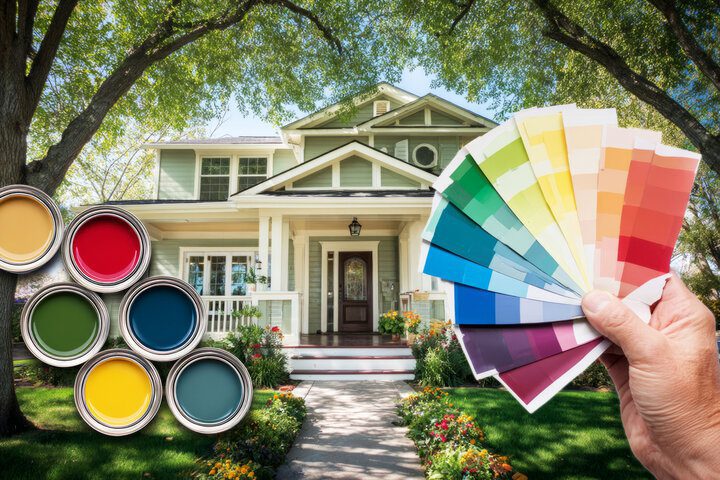
Choosing the best paint colors for homes in Brownstown, MI is about more than aesthetics. Southeast Michigan’s climate, architectural styles, and neighborhood trends all influence what works well for residential and multi-family properties. From brick colonials to newer suburban developments, homeowners and developers alike are looking for colors that balance curb appeal with long-term durability.
While Kincaid Construction Company is known for structural wood framing and rough carpentry services across Southern California, we understand how design decisions like paint selection connect directly to construction planning. Whether you’re developing multi-family housing, hospitality properties, or large-scale residential communities, cohesive color strategy enhances the structural work underneath.
In this guide, we’ll explore exterior and interior paint trends that align with Michigan living while also sharing insight from a construction perspective. Thoughtful color selection supports:
- Long-term maintenance performance
- Architectural consistency in new developments
- Increased resale and rental appeal
- Stronger first impressions for buyers and tenants
Let’s explore the top paint colors and how they connect to quality construction and framing systems.
Top Exterior Paint Colors for Brownstown Homes
Exterior paint is the first visual statement a home makes. In Brownstown and surrounding communities, homes range from traditional two-story colonials to ranch-style houses and contemporary builds. The right exterior color complements architectural details, roofing materials, and landscaping while standing up to Michigan’s seasonal extremes.
Neutral tones continue to dominate Southeast Michigan neighborhoods. Soft grays, warm greiges, and creamy whites offer timeless appeal without feeling flat. These shades work particularly well with brick accents and vinyl siding commonly found in Brownstown homes. They also provide flexibility for future updates to trim, shutters, and front doors.
Popular exterior colors include:
- Warm greige with white trim for classic suburban appeal
- Deep navy paired with crisp white accents
- Charcoal gray for modern farmhouse designs
- Muted sage green that blends with natural surroundings
- Off-white with black shutters for strong contrast
From a structural perspective, exterior paint should enhance—not overpower—the craftsmanship of framing and siding installation. Clean lines, well-aligned trim, and consistent siding layouts look best when paired with balanced color palettes. Developers planning multi-home projects benefit from selecting cohesive color families that create visual unity while allowing subtle variation.
Additionally, darker hues can highlight architectural depth, such as gables and dormers, while lighter tones make smaller homes appear more expansive. Choosing the right shade isn’t just about trendiness; it’s about how the home sits within its environment and how its structure is showcased.
When planning larger communities, consistency matters. A carefully curated exterior color palette:
- Strengthens neighborhood identity
- Prevents visual monotony
- Enhances long-term property values
- Supports marketing and leasing efforts
Modern Interior Shades for Michigan Living
Interior paint trends in Brownstown reflect a desire for comfort, versatility, and warmth. Michigan homeowners spend significant time indoors during colder months, so interior colors often prioritize coziness and natural light reflection.
Soft whites and creamy neutrals remain staples in living rooms and common areas. These shades maximize available daylight and create a flexible backdrop for furniture and décor changes. In newer builds, open-concept layouts benefit from consistent wall colors that visually expand shared spaces.
Trending interior shades include:
- Warm white with subtle beige undertones
- Light greige for open floor plans
- Dusty blue for bedrooms and offices
- Earthy clay tones for accent walls
- Soft sage green for kitchens and bathrooms
Accent walls are becoming more intentional rather than dramatic. Instead of bold reds or bright yellows, homeowners are opting for muted, nature-inspired tones that add depth without overwhelming the space.
In multi-family and hospitality developments, interior paint must balance design with durability. High-traffic corridors, shared spaces, and rental units require finishes that resist scuffs and are easy to maintain. From a construction standpoint, early coordination between framing teams and finish contractors ensures smooth transitions around trim, door frames, and built-in carpentry elements.
Well-selected interior colors also:
- Improve perceived room size
- Influence tenant satisfaction
- Support consistent branding in hospitality projects
- Reduce frequent repainting needs when timeless shades are used
Even in colder climates like Michigan, interior color trends lean toward warmth and subtle contrast rather than stark minimalism.
Weather-Ready Colors for Southeast Michigan
Southeast Michigan experiences hot summers, cold winters, humidity, snow, and fluctuating temperatures. Paint selection in Brownstown must consider how colors perform under these conditions.
Lighter exterior shades reflect sunlight and reduce heat absorption during warmer months. Meanwhile, high-quality paint formulations prevent cracking and peeling caused by freeze-thaw cycles. Earth-toned colors often hide dirt and salt residue better than bright whites, which is particularly useful during winter.
Weather-conscious color strategies include:
- Mid-tone grays that conceal seasonal grime
- Beige and taupe shades that age gracefully
- Muted greens that blend with natural surroundings
- Satin or semi-gloss finishes for moisture resistance
Paint color also interacts with building materials. Homes framed with structural wood systems rely on proper moisture barriers and ventilation. While Kincaid Construction Company specializes in wood framing projects across Southern California, we understand how environmental conditions affect material performance. Color and coating choices are part of the overall durability strategy.
In Brownstown neighborhoods near 48183, where homes may experience lake-effect weather patterns, selecting resilient coatings is particularly important. Durable paint enhances the longevity of siding and trim components while preserving curb appeal.
Developers and homeowners should prioritize:
- UV-resistant finishes
- Mildew-resistant formulations
- Flexible coatings that expand and contract
- Professional application techniques
Weather-ready colors are not only practical; they maintain a property’s visual appeal throughout the year.
Neutral Palettes That Boost Property Value
Neutral paint palettes consistently rank among the best investments for resale value. In Brownstown’s housing market, buyers often prefer move-in-ready homes with versatile color schemes that require minimal changes.
Greige continues to outperform both cool gray and beige because it bridges modern and traditional styles. Soft taupe, creamy off-white, and light mushroom tones offer similar flexibility. These shades photograph well for listings and create a clean canvas for staging.
High-value neutral choices include:
- Light greige for main living spaces
- Warm white ceilings for brightness
- Soft taupe in bedrooms
- Pale gray-beige for hallways
- Subtle contrasting trim in clean white
From a development standpoint, neutral palettes simplify large-scale painting schedules. When constructing multi-family units or hospitality projects, consistent neutrals reduce material waste and streamline procurement.
Neutral colors also:
- Appeal to a broader buyer demographic
- Reduce repaint costs between tenants
- Highlight architectural features
- Increase perceived square footage
While bold colors may attract attention, neutrals provide long-term stability in fluctuating markets. Thoughtful coordination between framing, drywall installation, and painting ensures crisp edges and seamless finishes that elevate the final product.
Trending Paint Picks for New Developments
New developments in Brownstown and nearby communities are embracing updated, contemporary palettes. Builders are moving beyond basic beige and incorporating subtle contrasts that add dimension to façades and interiors.
Modern farmhouse styles remain popular, featuring white or light gray exteriors with black window frames and natural wood accents. Deep green and slate blue are also gaining traction for front doors and accent siding sections.
Trending development-friendly palettes include:
- White exterior with charcoal trim
- Warm gray siding with stone accents
- Muted navy with natural wood elements
- Olive green paired with cream trim
- Sandstone tones for cohesive subdivisions
In larger-scale residential or mixed-use projects, selecting a curated palette across buildings creates visual harmony while allowing variation. This strategy prevents monotony and strengthens branding.
From a structural framing perspective, paint trends influence detailing decisions. Window placement, trim dimensions, and façade depth all interact with color contrast. Kincaid Construction Company, serving Southern California developers and general contractors, frequently collaborates with design teams to ensure structural wood framing supports aesthetic goals in commercial and multi-family builds.
Successful new development paint strategies focus on:
- Market differentiation
- Long-term maintenance planning
- Architectural emphasis
- Coordinated landscaping integration
When color selection aligns with structural execution, the result is a cohesive and professionally finished community.
Coordinating Paint Colors With Wood Framing
Paint colors do not exist independently from the building’s structural system. The quality of wood framing and rough carpentry directly influences how finished surfaces appear once painted.
Straight walls, properly aligned framing members, and accurate window openings create smoother drywall installation and cleaner paint lines. Poor structural alignment can lead to visible imperfections, no matter how high-end the paint product.
Coordinated planning between framing and finishing teams ensures:
- Even drywall seams
- Clean trim transitions
- Accurate corner alignment
- Reduced touch-ups and repainting
In large-scale commercial and multi-family projects, early communication between subcontractors supports efficiency. Structural wood framing establishes the skeleton of the building, and every aesthetic decision follows.
Kincaid Construction Company, operating throughout Southern California, provides scalable structural framing and rough carpentry solutions for developers and commercial builders. While paint selection is typically finalized later in the construction timeline, structural precision sets the stage for successful finishing work.
Even in residential communities like those in Brownstown near 48134, builders benefit from understanding how framing tolerances affect final paint appearance. Proper backing for fixtures, straight framing lines, and accurate sheathing installation all contribute to crisp, professional finishes.
When paint and framing strategies align, projects benefit from:
- Reduced delays during finishing phases
- Higher-quality visual results
- Improved inspection outcomes
- Stronger long-term performance
Color may be the final layer, but it depends entirely on the structural integrity beneath it.
Frequently Asked Questions
What does a commercial framing contractor do in large-scale construction projects?
A commercial framing contractor is responsible for constructing the structural framework of buildings using wood or other structural materials. This includes walls, floors, roof systems, and load-bearing components. Kincaid Construction Company serving Southern California provides structural wood framing and rough carpentry services that support multi-family housing, hospitality developments, and commercial projects with precision and efficiency.
How does structural wood framing impact construction timelines?
Structural wood framing is a critical phase that directly influences the overall construction schedule. Accurate planning, material coordination, and skilled labor ensure framing progresses efficiently and sets up subsequent trades for success. Kincaid Construction Company serving Southern California works closely with general contractors to align framing schedules with broader project milestones, helping maintain consistent progress across large-scale builds.
What is the difference between rough carpentry and finish carpentry?
Rough carpentry focuses on structural elements such as framing walls, installing subfloors, and constructing roof systems. Finish carpentry involves detailed aesthetic work like trim, cabinetry, and molding. Kincaid Construction Company specializes in structural framing and rough carpentry, ensuring the foundational components of commercial buildings are strong, aligned, and built to specification throughout Southern California.
Why is wood framing popular in multi-family and hospitality projects?
Wood framing is cost-effective, versatile, and efficient for mid-rise multi-family and hospitality structures. It allows for faster installation compared to some alternative systems while maintaining structural strength when engineered properly. Kincaid Construction Company serving Southern California delivers scalable wood framing systems designed to meet local codes and performance requirements for large developments.
How do framing contractors coordinate with other subcontractors?
Framing contractors collaborate closely with project managers, architects, engineers, and other trades to ensure alignment with design plans and schedules. Proper sequencing allows mechanical, electrical, and plumbing teams to work efficiently after framing is complete. Kincaid Construction Company maintains open communication with Southern California construction partners to support smooth transitions between phases.
What factors influence framing costs in commercial construction?
Framing costs are influenced by material prices, labor availability, building size, complexity of design, and regional code requirements. Efficient project planning and experienced crews help control costs while maintaining quality. Kincaid Construction Company serving Southern California emphasizes precision, productivity, and careful coordination to deliver value across large-scale commercial framing projects.
How early should a framing contractor be involved in a development project?
Engaging a framing contractor early in the planning stage allows for better budgeting, constructability reviews, and schedule forecasting. Early collaboration helps identify potential structural challenges before construction begins. Kincaid Construction Company supports developers and general contractors throughout Southern California by providing expertise during preconstruction and active build phases.
What makes structural precision important for final finishes like paint?
Structural precision ensures straight walls, square corners, and properly aligned openings, which directly affect drywall installation and paint results. Even minor framing inconsistencies can become visible after finishing work is applied. Kincaid Construction Company serving Southern California prioritizes accuracy in wood framing so that final finishes, including paint, reflect the high standards expected in commercial and multi-family construction.