
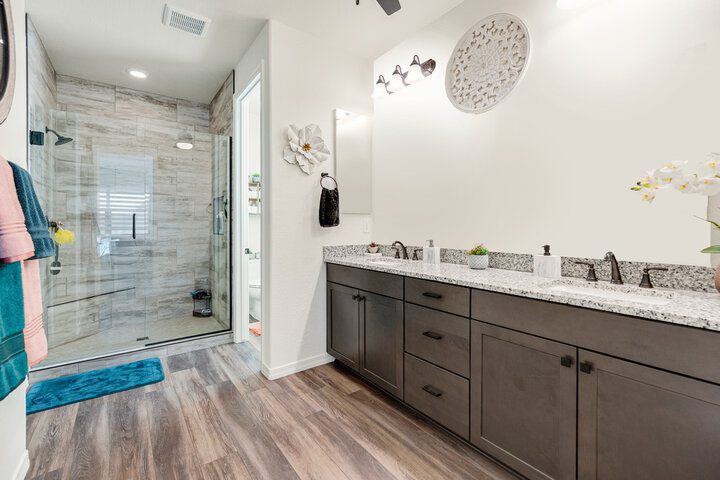
Bathroom upgrades are among the most common renovation projects in Brownstown, Michigan, and throughout Southeast Michigan. Whether part of a multi-family development, hospitality property refresh, or a tenant improvement project, understanding bathroom upgrade costs is essential for developers, property managers, and general contractors. This Brownstown, MI Bathroom Upgrade Cost Guide outlines pricing structures, labor considerations, and structural framing cost factors that influence project budgets.
While Kincaid Construction Company operates in Southern California and supports developers and commercial builders throughout the region, cost insights from markets like Brownstown provide helpful comparisons for national developers managing multi-state portfolios. Many of the structural framing and rough carpentry principles that impact bathroom renovation costs remain consistent across regions, even when labor rates differ.
From material selection to timeline management, this guide breaks down the core cost drivers behind bathroom upgrades, with a focus on commercial-scale applications where structural wood framing and rough carpentry play a critical role.
Average Bathroom Upgrade Costs in Brownstown
Bathroom upgrade costs in Brownstown vary significantly depending on project type, scope, and building classification. In residential settings, cosmetic remodels may start at moderate price points, while full-scale renovations in multi-family or hospitality projects can reach substantially higher per-unit investments.
For residential properties in Brownstown and nearby communities such as Trenton and Woodhaven, average bathroom remodel costs typically fall into three broad tiers:
- Cosmetic refresh: $8,000 to $15,000
- Mid-range renovation: $15,000 to $25,000
- High-end or full gut remodel: $25,000 to $40,000+
In commercial and multi-family environments, costs are often calculated per unit or per square foot rather than as a single lump sum. For apartment complexes and hotels, bathroom upgrades may range from $12,000 to $30,000 per unit depending on scope, structural modifications, and finish level.
Key cost variables in Brownstown include:
- Age of existing structures and code upgrade requirements
- Plumbing relocation versus fixture-in-place replacement
- Structural framing modifications
- Accessibility compliance under ADA standards
- Volume pricing for large-scale renovations
In older housing stock areas near 48183, for example, unforeseen framing repairs and subfloor replacement can significantly influence total cost. Commercial properties face similar conditions when upgrading aging facilities to meet current performance and safety standards.
For developers managing multi-property portfolios, understanding these cost brackets allows for more accurate budgeting and better alignment with financing, capital improvement planning, and construction scheduling.
Labor and Material Pricing in Southeast MI
Labor and material pricing in Southeast Michigan directly affect bathroom upgrade costs. Brownstown sits within the greater Detroit metro construction market, where skilled trades availability and seasonal demand influence pricing trends.
Labor expenses typically account for 40 percent to 60 percent of total bathroom renovation budgets. In commercial settings, union requirements, prevailing wage standards, and project scale can further affect overall cost structures.
Common labor components include:
- Demolition and debris removal
- Rough plumbing and electrical work
- Structural framing adjustments
- Drywall installation and finishing
- Finish carpentry and fixture installation
Material pricing has also experienced fluctuations due to national supply chain factors. Structural lumber, plywood, drywall, and engineered wood products are especially relevant for projects requiring wall reconfiguration or floor system reinforcement.
Material cost drivers often include:
- Lumber market volatility
- Fixture brand and performance specifications
- Tile selection and availability
- Waterproofing systems and backer board materials
- Ventilation and HVAC integration components
While Michigan pricing reflects regional labor dynamics, similar material pressures affect construction markets nationwide. Kincaid Construction Company, serving Southern California developers, regularly evaluates framing lumber pricing, engineered truss availability, and procurement timelines to keep large-scale projects on track.
For builders comparing Michigan and California markets, labor rates may differ, but the structural principles governing cost remain consistent. Proper planning, sequencing, and coordination among trades are essential to managing budgets effectively in any region.
Commercial vs. Residential Remodel Costs
The cost difference between commercial and residential bathroom upgrades is substantial. Commercial projects typically require higher durability standards, stricter code compliance, and more complex coordination among trades.
Residential bathroom remodels often focus on aesthetics and homeowner preferences. In contrast, commercial upgrades must prioritize performance, safety, and longevity under heavy usage conditions.
Commercial project considerations include:
- ADA accessibility compliance
- Fire-rated wall assemblies
- Moisture control and commercial-grade waterproofing
- Impact-resistant fixtures and partitions
- Increased ventilation capacity
Multi-family properties in Brownstown and surrounding Southeast Michigan communities often fall somewhere between single-family residential and full commercial classification. These projects must balance cost control with durability, especially when renovating dozens or hundreds of units simultaneously.
In hospitality renovations, bathroom upgrades are often phased to minimize operational disruption. Costs may increase due to compressed timelines and logistical coordination requirements.
From a structural perspective, commercial bathroom renovations are more likely to require:
- Wall relocation and reconfiguration
- Floor system reinforcement
- Structural backing for grab bars and accessories
- Ceiling framing modifications for mechanical upgrades
Kincaid Construction Company specializes in structural wood framing and rough carpentry for large-scale commercial and multi-family developments throughout Southern California. While the Brownstown market differs geographically, the structural cost considerations for bathroom upgrades remain similar when projects involve re-framing, layout changes, or load-bearing modifications.
Framing and Carpentry Cost Factors
Structural wood framing and rough carpentry are foundational components of any bathroom renovation that extends beyond surface-level improvements. When bathrooms are reconfigured or expanded, framing costs become a central budget category.
In Brownstown projects, framing costs may increase when:
- Walls are removed or relocated
- Load-bearing elements require reinforcement
- Subfloors show water damage
- Ceiling framing must accommodate new ductwork
- Blocking is added for ADA compliance
Framing labor and materials generally represent 10 percent to 20 percent of a full-scale commercial bathroom renovation, though this can rise if extensive structural modifications are necessary.
Key framing cost drivers include:
- Type and grade of lumber specified
- Engineered wood products versus dimensional lumber
- Complexity of layout changes
- Height and configuration of wall assemblies
- Fire-rated and sound-rated assembly requirements
In large multi-family renovations, consistent unit layouts can help reduce framing costs through repetition and efficiency. Standardized bathroom footprints allow crews to streamline production and reduce waste.
Kincaid Construction Company provides structural wood framing and rough carpentry services for multi-family housing, hospitality builds, and commercial structures throughout Southern California. Their experience in high-volume framing environments highlights the importance of precision layout, moisture management, and sequencing coordination to prevent costly rework.
Whether in Brownstown or Southern California, early involvement of framing professionals helps developers identify potential cost impacts before demolition begins.
Timeline Impact on Bathroom Renovation Budgets
Project timelines directly influence renovation costs. Accelerated schedules often increase labor expenses, while prolonged timelines can add carrying costs and administrative overhead.
In Brownstown, seasonal factors may also affect construction schedules. Winter weather can slow exterior-related work, while interior renovations may face labor availability constraints during peak construction seasons.
Timeline-related cost considerations include:
- Overtime labor rates
- Temporary facilities or tenant accommodations
- Extended equipment rentals
- Storage fees for early material deliveries
- Financing and holding costs
For multi-unit properties, phasing strategies significantly affect overall budget performance. Renovating 10 units at a time versus 50 units at once changes labor allocation, supervision needs, and procurement efficiency.
Effective timeline management strategies include:
- Detailed pre-construction planning
- Clear scope definition
- Coordinated trade scheduling
- Early material procurement
- Regular progress monitoring
Kincaid Construction Company supports large-scale Southern California projects with structured scheduling processes that align framing milestones with mechanical, electrical, and plumbing rough-ins. This integrated approach minimizes downtime between trades and helps control overall construction costs.
When bathroom renovations are part of broader capital improvement plans, integrating structural framing timelines with other building upgrades ensures smoother project execution and fewer costly disruptions.
Cost-Saving Tips for Large-Scale Projects
For developers overseeing multiple bathroom upgrades across a property portfolio, cost efficiency depends on strategic planning rather than simple material downgrades.
In Brownstown and Southeast Michigan, large-scale renovation projects benefit from standardized design and bulk purchasing strategies.
Effective cost-saving approaches include:
- Standardizing bathroom layouts across units
- Locking in material pricing through volume purchasing
- Phasing construction to maintain occupancy
- Conducting pre-renovation structural assessments
- Coordinating framing and MEP upgrades simultaneously
Value engineering can also help reduce unnecessary expenditures while maintaining performance standards. For example, repositioning fixtures without relocating main plumbing stacks can significantly reduce demolition and framing costs.
Additional budget control strategies include:
- Early contractor involvement during design
- Detailed scope documentation to avoid change orders
- Clear communication among trades
- Accurate quantity takeoffs for framing materials
- Realistic contingency allocations
Kincaid Construction Company works with developers and general contractors throughout Southern California to optimize structural wood framing efficiency in multi-family and hospitality environments. By focusing on layout precision, sequencing coordination, and disciplined material management, large-scale projects achieve predictable cost performance.
Although this guide focuses on Brownstown, MI bathroom upgrade cost considerations, the structural and scheduling principles discussed here apply broadly across commercial markets.
Frequently Asked Questions
What does a commercial framing contractor do on large-scale projects?
A commercial framing contractor handles the structural wood framework that forms the skeleton of a building. This includes wall framing, floor systems, roof trusses, backing installation, and rough carpentry components. Kincaid Construction Company serving Southern California focuses on multi-family, hospitality, and commercial developments where precision framing supports structural integrity, code compliance, and efficient coordination with other trades.
How does rough carpentry differ from finish carpentry?
Rough carpentry involves structural and load-bearing components such as framing walls, subfloors, and roof systems. Finish carpentry focuses on aesthetic elements like trim, cabinetry, and decorative millwork. In large Southern California commercial builds, Kincaid Construction Company specializes in structural wood framing and rough carpentry, ensuring buildings have a solid foundation before interior finishes begin.
How early should a framing subcontractor be involved in a project?
Engaging a framing subcontractor during the pre-construction phase improves cost accuracy and constructability planning. Early collaboration allows for material takeoffs, sequencing input, and identification of potential design conflicts. Kincaid Construction Company serving Southern California works with developers and general contractors early in the planning process to support efficient scheduling and budget forecasting.
What factors affect wood framing costs in California commercial projects?
Wood framing costs are influenced by lumber pricing, labor rates, building height, structural complexity, and fire-rating requirements. Engineered wood products and seismic considerations also impact budgets in California. Kincaid Construction Company evaluates these variables on each Southern California project to provide scalable framing solutions aligned with performance standards and timelines.
How does framing impact construction timelines?
Framing establishes the structural platform for mechanical, electrical, and plumbing trades. Delays in framing can cascade into other phases, while efficient framing accelerates project momentum. Kincaid Construction Company coordinates closely with project teams across Southern California to align structural milestones with overall construction schedules.
What role does a framing contractor play in multi-family developments?
In multi-family housing, framing contractors construct repetitive unit layouts, corridor systems, stairwells, and structural assemblies that define the building envelope. Consistency and quality control are essential for large developments. Kincaid Construction Company supports Southern California multi-family builders with scalable framing crews capable of meeting demanding production schedules.
Can framing adjustments be made during renovation projects?
Yes, framing modifications are common during renovations, particularly when walls are relocated or structural repairs are required. Proper assessment ensures load paths remain intact and code requirements are met. Kincaid Construction Company serving Southern California evaluates renovation framing needs carefully to maintain safety and structural performance.
Why is structural precision important in hospitality construction?
Hospitality projects demand durability, sound control, and strict adherence to design specifications. Framing precision affects room alignment, finish quality, and long-term performance. Kincaid Construction Company provides structural wood framing services across Southern California that support efficient build-outs and high-quality outcomes for hotel and hospitality developments.
Understanding bathroom upgrade costs in Brownstown, Michigan requires attention to labor trends, material pricing, structural framing requirements, and scheduling strategy. While Kincaid Construction Company operates in Southern California, the construction principles outlined in this guide reflect industry-wide best practices that apply to commercial framing and rough carpentry projects across growing markets nationwide.