
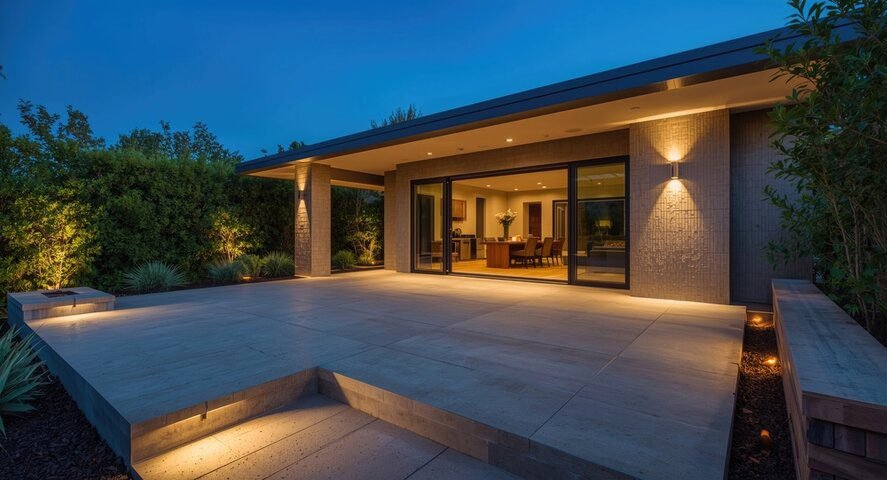
Exterior lighting plays a critical role in how commercial and multi-family properties function, perform, and present themselves after dark. In a community like Brownstown, MI, where mixed-use development, hospitality, and residential growth continue to expand, upgrading exterior lighting is more than a cosmetic improvement. It is a strategic investment in safety, energy efficiency, and long-term property value.
While Kincaid Construction Company is based in Southern California and supports developers and general contractors across that region, our experience in structural wood framing and rough carpentry provides valuable insight into how exterior lighting should be integrated into commercial construction projects. From early framing coordination to final build-out, lighting decisions influence structural planning, façade design, and long-term building performance.
For property owners and builders exploring Brownstown, MI exterior lighting upgrade ideas, the key is to approach lighting as part of a coordinated construction strategy rather than a standalone feature. Successful upgrades typically focus on:
- Architectural integration with structural framing
- Long-term energy performance and code compliance
- Safety and visibility for tenants and visitors
- Durability in harsh seasonal climates
- Scalability for future expansion or technology upgrades
The sections below explore how modern exterior lighting concepts align with commercial framing practices, large-scale construction planning, and forward-thinking development strategies.
Modern Exterior Lighting for Brownstown Sites
Modern exterior lighting has evolved far beyond simple floodlights and wall packs. In Brownstown commercial environments, property owners are increasingly investing in architectural lighting systems that enhance building lines, highlight entrances, and create a professional nighttime presence.
Lighting upgrades often start during the design and framing phase. When structural wood framing is planned with lighting in mind, contractors can accommodate concealed conduit pathways, mounting supports, soffit lighting pockets, and façade integration points. This level of coordination helps avoid costly retrofits later and improves the overall aesthetic outcome.
From a design standpoint, modern exterior lighting in Brownstown typically focuses on:
- Clean-lined wall-mounted LED fixtures
- Integrated canopy and soffit lighting
- Accent lighting for signage and branding
- Bollard lighting for walkways and pedestrian areas
- Architectural uplighting to emphasize building features
Commercial and multi-family projects benefit significantly when lighting is integrated into framing plans early. For example, hospitality and apartment developments often include recessed lighting beneath balconies or roof overhangs. Proper blocking and framing support ensure that these fixtures are securely installed and weather-resistant.
Modern lighting also enhances curb appeal. For mixed-use or retail developments, well-designed exterior lighting creates a welcoming environment that attracts tenants and customers. Even industrial or warehouse facilities in Brownstown can benefit from streamlined, high-output LED systems that present a clean and professional image.
When developers treat lighting as a structural and architectural element rather than an afterthought, the results are both visually compelling and functionally superior.
Energy-Efficient Upgrades for MI Facilities
Energy efficiency is one of the primary drivers behind exterior lighting upgrades in Michigan. With fluctuating seasonal temperatures and extended winter darkness, facilities often rely heavily on exterior lighting for longer periods throughout the year. Modern LED systems dramatically reduce operating costs compared to traditional metal halide or high-pressure sodium fixtures.
LED technology provides measurable advantages in commercial environments. These systems consume significantly less electricity, last longer, and require less maintenance. For property owners managing multi-building sites, this translates into lower long-term operating expenses and fewer service interruptions.
Key energy-efficient upgrade options include:
- High-lumen LED wall packs with low wattage consumption
- Motion-activated perimeter lighting
- Photocell-controlled dusk-to-dawn systems
- Solar-assisted pathway lighting
- Networked lighting controls for centralized management
When structural framing and rough carpentry are planned thoughtfully, lighting systems can be installed in optimal positions that reduce glare and improve efficiency. For example, properly aligned wall assemblies and overhang designs can enhance light distribution, minimizing the need for excessive fixture output.
Energy efficiency also contributes to sustainability goals. Many developers aim to meet green building standards or local energy codes. By upgrading exterior lighting, facilities in Brownstown can reduce carbon footprint while improving performance. Although Kincaid Construction Company serves Southern California developers, the principles of energy-conscious construction remain consistent across markets. Efficient systems paired with strong structural design deliver lasting value.
Ultimately, exterior lighting upgrades are not just about cutting utility costs. They support broader operational efficiency, tenant satisfaction, and regulatory compliance.
Lighting Solutions for Commercial Builds
Commercial construction projects require lighting systems that balance durability, performance, and scalability. In Brownstown, facilities such as retail centers, office buildings, hospitality developments, and multi-family housing must rely on consistent illumination that withstands heavy use and changing weather conditions.
Lighting solutions for commercial builds are most effective when incorporated during the framing phase. Structural wood framing determines mounting locations, façade articulation, and load-bearing capacity for canopy lighting or signage illumination. Coordination between framing contractors and electrical teams ensures seamless integration.
Effective commercial lighting solutions often include:
- Perimeter security lighting for parking areas
- Canopy lighting for entrances and drop-off zones
- Step and stair illumination for code compliance
- Dock and service area lighting for logistics operations
- Accent lighting to reinforce architectural branding
Durability is especially important in climates with snow, rain, and temperature swings. Fixtures must be weather-rated and securely mounted to framing members that can handle wind and environmental stress. Proper backing and blocking during rough carpentry stages provide the structural support needed for long-term reliability.
Another factor in commercial builds is adaptability. As businesses grow or tenant needs change, lighting systems may need to expand. Thoughtful planning allows for additional circuits, mounting points, and fixture upgrades without major structural modifications.
Kincaid Construction Company’s experience with large-scale commercial framing in Southern California highlights the importance of early coordination. Whether in Brownstown or across California markets, scalable lighting solutions paired with precise framing practices create efficient, high-performing buildings.
Enhancing Safety with Exterior LEDs in Brownstown
Safety is one of the most compelling reasons to upgrade exterior lighting. In commercial and multi-family settings, adequate illumination reduces liability risks, discourages criminal activity, and improves pedestrian visibility.
Exterior LED systems provide bright, consistent light without the warm-up time associated with older technologies. This instant-on capability is particularly valuable for motion-activated systems in parking lots and building perimeters.
Safety-focused exterior LED upgrades often include:
- Uniform parking lot lighting to eliminate dark zones
- Clearly illuminated entry points and exits
- Pathway lighting along sidewalks and courtyards
- Stairwell and ramp lighting for ADA compliance
- Emergency egress lighting tied to backup systems
From a construction standpoint, ensuring safety lighting is properly supported begins during framing. Mounting heights, fixture placement, and structural reinforcement all influence how effectively light is distributed. Well-positioned framing elements allow for even coverage, minimizing shadows and glare.
In multi-family developments, exterior lighting directly affects tenant perception. Residents feel more secure when parking areas, entrances, and communal spaces are well lit. For hospitality properties, guest satisfaction is strongly influenced by first impressions at night.
Though Kincaid Construction Company operates in Southern California, the commitment to safety-driven design applies universally. Exterior LED systems, when integrated with strong structural framing, contribute to safer environments and long-term asset protection.
Framing Projects That Shine After Dark in Southeast Michigan
A building’s ability to “shine” after dark depends heavily on the structural framework that supports lighting elements. Framing projects with nighttime performance in mind ensures that architectural details are highlighted and functional lighting performs optimally.
Structural wood framing plays a foundational role in supporting exterior lighting features. Properly engineered framing allows for:
- Recessed soffit lighting installations
- Integrated balcony and overhang illumination
- Secure mounting for heavy-duty fixtures
- Hidden conduit pathways for clean aesthetics
- Reinforced attachment points for signage lighting
In large-scale projects such as multi-family housing or mixed-use developments, lighting often enhances façade articulation. Strategic placement of studs, beams, and blocking enables designers to incorporate light strips, sconces, and architectural accents without compromising structural integrity.
Framing also influences maintenance accessibility. Thoughtful construction allows technicians to service fixtures without damaging siding or exterior finishes. This reduces lifecycle costs and prevents unnecessary structural alterations.
Kincaid Construction Company brings decades of experience in structural wood framing for commercial and hospitality projects throughout Southern California. While the market context may differ from Southeast Michigan, the same principles apply: high-quality framing creates the foundation for lighting systems that perform reliably and elevate architectural design.
When framing and lighting are aligned from the outset, buildings not only meet functional needs but also create a distinctive presence after sunset.
Smart Lighting Planning for New Developments
Smart lighting technology is transforming how exterior systems operate. For new developments in Brownstown, incorporating intelligent controls during construction offers long-term advantages in efficiency and flexibility.
Smart lighting systems allow property managers to monitor and adjust illumination remotely. Dimming schedules, motion sensors, and centralized control platforms help optimize energy use while maintaining safety standards.
Common smart lighting features include:
- App-based lighting management systems
- Occupancy and motion detection sensors
- Daylight harvesting controls
- Automated dimming during low-traffic hours
- Integration with security and surveillance systems
Planning for smart systems should begin during design and framing stages. Structural layouts must accommodate control panels, wiring pathways, and fixture placements that support connectivity. Early collaboration between framing teams, electricians, and developers ensures smooth implementation.
For large-scale commercial projects, smart lighting provides data insights that inform operational decisions. Property owners can analyze usage patterns, identify maintenance needs, and adjust settings to improve tenant comfort.
Kincaid Construction Company supports scalable construction solutions across Southern California, working closely with developers and general contractors to ensure that structural framing aligns with evolving building technologies. Smart lighting planning is a natural extension of this forward-thinking approach.
By integrating intelligent systems during new construction, developers position their properties for long-term performance, adaptability, and cost savings.
Frequently Asked Questions
What does a commercial framing contractor do on large-scale construction projects?
A commercial framing contractor is responsible for constructing the structural framework of a building, including walls, floors, roof systems, and load-bearing assemblies. Kincaid Construction Company serving Southern California specializes in structural wood framing and rough carpentry for multi-family, hospitality, and commercial projects. This work forms the backbone of the structure and supports all other trades, including electrical and exterior lighting systems.
How does rough carpentry differ from finish carpentry in commercial builds?
Rough carpentry focuses on structural components such as framing, sheathing, blocking, and structural supports, while finish carpentry addresses visible details like trim and cabinetry. In large-scale developments across Southern California, Kincaid Construction Company handles rough carpentry to ensure the building’s structural integrity. This foundational work directly affects how exterior systems, including lighting and cladding, are installed.
When should exterior lighting be planned during construction?
Exterior lighting should be planned during the early design and framing phases. Coordinating fixture placement, mounting supports, and conduit pathways with structural wood framing prevents costly modifications later. Kincaid Construction Company collaborates with developers and general contractors throughout Southern California to ensure framing systems accommodate lighting and other building components efficiently.
How does structural wood framing support exterior lighting systems?
Structural wood framing provides the mounting surfaces and reinforcement needed for exterior lighting fixtures. Proper blocking, backing, and load distribution ensure fixtures remain secure and weather-resistant. On commercial projects in Southern California, Kincaid Construction Company integrates these considerations into framing layouts to support long-term durability and performance.
What types of projects benefit most from professional commercial framing services?
Multi-family housing, hotels, mixed-use developments, retail centers, and office buildings benefit significantly from experienced commercial framing services. These large-scale projects require precise coordination and efficient execution. Kincaid Construction Company serving Southern California delivers scalable framing solutions that align with demanding project schedules and complex design requirements.
How do framing contractors coordinate with other trades on job sites?
Framing contractors work closely with general contractors, electricians, plumbers, and HVAC teams to ensure structural assemblies support all building systems. Clear communication during preconstruction and active building phases helps prevent conflicts and delays. Kincaid Construction Company emphasizes collaboration across Southern California job sites to maintain productivity and quality standards.
What factors influence commercial construction timelines?
Construction timelines depend on project size, design complexity, permitting processes, material availability, and trade coordination. Structural framing is a critical milestone because many subsequent phases depend on its completion. Kincaid Construction Company supports efficient scheduling across Southern California by delivering reliable framing and rough carpentry services that keep projects moving forward.
Why is choosing an experienced framing subcontractor important for developers?
An experienced framing subcontractor ensures structural accuracy, code compliance, and efficient sequencing with other trades. This reduces the risk of costly corrections and project delays. Kincaid Construction Company serving Southern California brings decades of expertise in large-scale wood framing, providing developers and general contractors with dependable structural solutions that support successful project outcomes.