
Brownstown Township, Michigan is no stranger to harsh winters, heavy rains, and temperature swings that test the durability of residential and multi-family buildings. For property owners, developers, and general contractors, understanding how to weatherproof structures in Southeast Michigan is critical to long-term performance and energy efficiency.
While this guide focuses on Brownstown, MI home weatherproofing considerations, it is provided by Kincaid Construction Company, a specialized commercial framing and rough carpentry contractor serving developers and builders throughout Southern California. With decades of experience in structural wood framing for multi-family, hospitality, and large-scale commercial projects, our team understands how climate-specific challenges shape framing decisions, material selection, and building envelope performance.
Below, we break down the essential elements of weatherproofing homes and multi-family structures in Brownstown and similar Midwest climates, while also sharing best practices relevant to large-scale construction projects across growing markets.
Understanding Brownstown’s Climate Risks
Brownstown Township experiences a humid continental climate marked by freezing winters, hot summers, and significant precipitation throughout the year. These weather patterns create ongoing stress on exterior walls, roofing systems, foundations, and framing assemblies.
Winter temperatures frequently drop below freezing, leading to ice dams, frost heave, and condensation issues inside wall cavities. Spring and summer bring heavy rain and humidity, increasing the risk of moisture intrusion and mold growth. In neighborhoods across Brownstown, including areas near 48183, homes must be built and weatherproofed to withstand seasonal extremes.
Key climate risks in Brownstown include:
- Extended freeze-thaw cycles that stress framing connections
- Wind-driven rain penetrating poorly sealed assemblies
- High humidity causing condensation within wall cavities
- Snow accumulation contributing to roof load and ice dam formation
- Temperature swings that cause expansion and contraction of materials
For multi-family developments and commercial structures, these risks multiply. Larger roof spans, more complex wall systems, and higher occupancy loads demand precise structural framing and a carefully designed building envelope.
Effective weatherproofing starts with understanding how climate affects structural wood framing. Moisture management, thermal continuity, and air sealing are not optional upgrades. They are essential components of long-term building performance.
In Southern California, where Kincaid Construction Company operates, climate challenges differ. However, the principle remains the same: framing must support a continuous, well-designed building envelope that protects against local environmental conditions. Whether in a snowy Midwest township or a coastal California city, climate-responsive construction is foundational to durability.
Key Areas Where Michigan Homes Lose Heat
In Brownstown homes and multi-family buildings, heat loss is often less about one major flaw and more about cumulative small gaps throughout the structure. Even well-built homes can lose significant energy through poorly sealed framing transitions.
The most common areas of heat loss include:
- Attic and roof assemblies
- Rim joists and sill plates
- Window and door openings
- Electrical and plumbing penetrations
- Wall-to-foundation connections
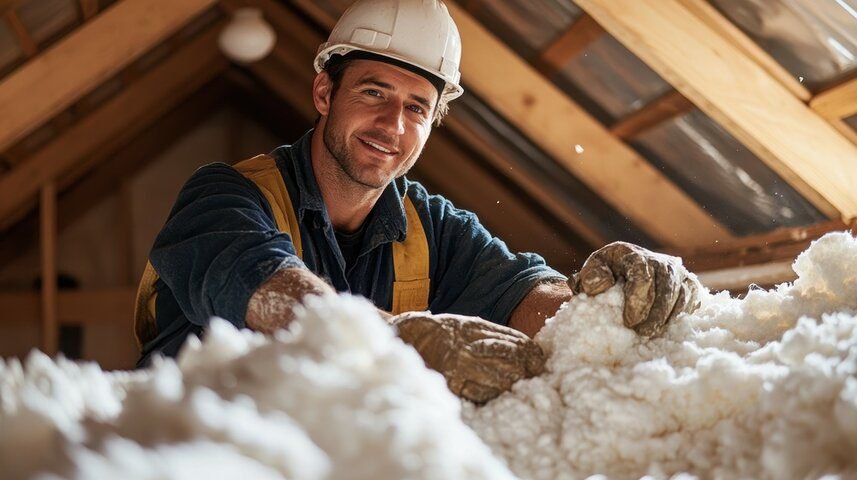
Attics are particularly vulnerable. Without proper insulation depth and air sealing at the ceiling plane, warm interior air escapes upward, increasing heating costs and contributing to ice dam formation. In multi-family construction, repeated framing layouts can amplify this issue if detailing is inconsistent.
Rim joists represent another critical point. These perimeter framing components connect floors to foundation walls and are frequently under-insulated. In cold climates, unsealed rim joists allow cold air infiltration and condensation against wood framing.
Windows and doors are common leakage points as well. Poor flashing, improper shimming, or gaps in rough openings compromise performance. From a framing perspective, accurate layout and tight tolerances are essential to ensuring window assemblies integrate seamlessly with weather-resistant barriers.
To minimize heat loss, builders and developers should prioritize:
- Continuous insulation strategies
- Air barrier continuity across framing transitions
- Proper flashing at all penetrations
- Tight rough openings for doors and windows
- Coordination between framing, insulation, and mechanical trades
For large-scale projects, early coordination between structural framing teams and building envelope consultants can dramatically improve energy performance. In Southern California projects, Kincaid Construction Company supports this coordination by delivering precise structural framing that allows other trades to execute air sealing and insulation details effectively.
Heat loss is not just an energy issue. It is a structural durability issue. Moisture from condensation inside wall cavities can lead to rot, mold, and compromised framing members over time. A well-framed and well-sealed structure protects both occupant comfort and long-term building integrity.
Weatherproofing for Multi-Family Projects
Multi-family construction in Brownstown presents unique weatherproofing challenges. Unlike single-family homes, these projects involve shared walls, complex rooflines, stacked plumbing systems, and large surface areas exposed to the elements.
From a framing standpoint, weatherproofing begins before insulation or siding is installed. Structural wood framing must accommodate continuous air barriers, vapor control layers, and exterior sheathing systems designed to resist moisture intrusion.
In multi-family developments, key considerations include:
- Proper alignment of wall assemblies floor to floor
- Continuous fire blocking that does not interrupt air sealing
- Coordination of mechanical penetrations through framed walls
- Structural sheathing that supports both lateral strength and weather resistance
- Roof framing designed for snow loads and drainage performance
Stack effect is a major concern in multi-story buildings. Warm air rises, creating pressure differentials that pull cold air in at lower levels. Without careful air sealing at floor lines and shaft walls, energy losses multiply quickly.
Shared corridors, elevator shafts, and stairwells also introduce additional air movement paths. Framing teams must understand how these structural elements interact with air and vapor control strategies.
In large-scale commercial and multi-family projects across Southern California, Kincaid Construction Company approaches framing with similar attention to envelope integration. While snow loads may not be the same, performance expectations remain high. Developers require structures that meet strict energy codes, reduce long-term maintenance, and support sustainable building goals.
Weatherproofing multi-family projects successfully requires:
- Early collaboration between architects, engineers, and framing contractors
- Consistent detailing across repetitive units
- Thorough inspection of framing transitions before enclosure
- Scalable installation methods that maintain quality at volume
When framing is precise and consistent, it creates the foundation for high-performance weatherproofing systems. In any climate, multi-family durability starts with structural accuracy.
Best Materials for SE Michigan Weather Conditions
Material selection plays a crucial role in weatherproofing homes and multi-family buildings in Brownstown. Cold winters and humid summers demand products that resist moisture, tolerate thermal movement, and maintain structural integrity.
For wood-framed construction, selecting the right sheathing, sealants, and moisture barriers can dramatically influence performance.
Commonly recommended materials include:
- Exterior-grade OSB or plywood sheathing with proper edge sealing
- Self-adhered flashing membranes for window and door openings
- High-performance house wraps or fluid-applied air barriers
- Closed-cell spray foam for rim joists and complex cavities
- Pressure-treated lumber at sill plates and foundation connections
Exterior sheathing must balance structural strength with moisture resistance. Proper fastening patterns and spacing are equally important to prevent warping or buckling during seasonal humidity shifts.
Flashing is another critical component. In Southeast Michigan, wind-driven rain and melting snow can infiltrate even small gaps. Self-adhered flashing membranes provide durable, long-lasting protection around penetrations and transitions.
Sealants should remain flexible in freezing temperatures. Products that become brittle in cold weather can crack, allowing air and moisture infiltration. Builders must ensure compatibility between sealants, membranes, and substrates.
For larger-scale projects, specifying materials that meet performance standards across multiple buildings ensures consistency. In Southern California, Kincaid Construction Company works with project teams to frame structures that accommodate advanced sheathing systems and modern air barrier technologies.
Material performance depends on proper installation. Even the best products fail if framing is uneven, out of square, or improperly aligned. Precision rough carpentry directly influences how well weatherproofing systems function.
Sealing and Framing for Lasting Protection
Structural framing is more than just the skeleton of a building. It determines how effectively air barriers, insulation systems, and exterior finishes perform over time.
In Brownstown homes, careful attention to framing connections helps prevent air leakage and moisture intrusion. Gaps at top plates, bottom plates, and intersecting walls can compromise otherwise well-designed weatherproofing strategies.
Critical framing and sealing practices include:
- Sealing sill plates to foundation walls with gasket material or sealant
- Installing continuous sheathing to minimize seams
- Aligning framing members to support consistent insulation coverage
- Blocking and backing to support air barrier transitions
- Coordinating penetration locations to simplify sealing
Top plate connections are often overlooked. Where interior partition walls meet exterior walls, small gaps can allow warm air to escape into attic spaces. Sealing these intersections before drywall installation significantly improves energy performance.
Similarly, bottom plate sealing prevents cold air infiltration at floor levels. In climates with snow and ice, this detail reduces drafts and moisture accumulation near baseboards.
For multi-family structures, maintaining consistency across dozens or hundreds of units requires disciplined project management. Standardized framing details, clear scopes of work, and quality control inspections ensure every building meets the same performance benchmarks.
Kincaid Construction Company brings this disciplined approach to structural wood framing projects across Southern California. By delivering precise rough carpentry and scalable framing solutions, we help create building envelopes that perform reliably in diverse climates and demanding schedules.
Long-term protection depends on viewing framing and weatherproofing as interconnected systems rather than separate scopes of work.
Partnering with Local Construction Experts
Weatherproofing success in Brownstown Township depends on collaboration between knowledgeable contractors, architects, engineers, and developers. Local climate experience informs smarter detailing decisions and better material selection.
Property owners and developers should seek construction partners who understand:
- Regional building codes and energy requirements
- Snow load and wind exposure considerations
- Moisture management strategies specific to Michigan
- Coordination between framing and envelope trades
- Efficient scheduling across large-scale projects
Even in areas such as 48134, where newer developments may feature updated energy standards, execution quality remains the determining factor in performance. Skilled framing crews and experienced project managers make the difference between theoretical design and real-world durability.
While Kincaid Construction Company operates in Southern California, our expertise in structural wood framing and rough carpentry reflects a deep understanding of how climate impacts building performance. We support developers and general contractors throughout Southern California with scalable solutions for multi-family, hospitality, and large commercial projects.
By focusing on precision, coordination, and structural integrity, our team helps create buildings that are ready for high-performance envelope systems. Whether addressing Midwest freeze-thaw cycles or California seismic and coastal considerations, the foundation of durability remains the same: disciplined framing and collaborative execution.
Partnering with experienced construction professionals ensures that weatherproofing strategies are integrated from the earliest phases of design through final enclosure. That proactive approach reduces callbacks, protects investments, and enhances long-term occupant comfort.
Frequently Asked Questions
What does a commercial framing contractor do on multi-family projects?
A commercial framing contractor is responsible for constructing the structural wood framework of a building, including exterior and interior load-bearing walls, floor systems, and roof structures. On multi-family projects, this involves precise layout, installation of structural sheathing, and coordination with other trades. Kincaid Construction Company serving Southern California delivers scalable framing solutions that support efficient project timelines and high-performance building envelopes.
How does rough carpentry differ from finish carpentry in large-scale construction?
Rough carpentry focuses on structural elements such as framing, blocking, and sheathing that form the building’s core support system. Finish carpentry involves aesthetic details like trim, cabinetry, and moldings installed later in the project. In large commercial and multi-family developments across Southern California, Kincaid Construction Company specializes in rough carpentry that ensures structural integrity and readiness for subsequent trades.
Why is structural wood framing important for energy efficiency?
Structural wood framing directly impacts how insulation, air barriers, and exterior cladding systems are installed. Poorly aligned or inconsistent framing can create gaps that lead to air leakage and thermal bridging. By delivering precise framing services across Southern California, Kincaid Construction Company helps developers create structures that support continuous insulation and effective weatherproofing strategies.
How early should a framing subcontractor be involved in a commercial project?
Framing subcontractors should ideally be involved during preconstruction or early design coordination phases. Early input allows for better integration of structural systems, sequencing, and envelope detailing. Kincaid Construction Company serving Southern California works collaboratively with developers and general contractors to align framing strategies with project goals and construction schedules.
What factors affect the timeline for framing a multi-family building?
Framing timelines depend on project size, building height, weather conditions, material availability, and coordination with other trades. Efficient scheduling and experienced crews can significantly streamline the process. Across Southern California, Kincaid Construction Company delivers scalable framing operations designed to meet demanding construction schedules without compromising quality.
How does framing impact long-term building durability?
The structural frame supports all other building systems, so errors or inconsistencies can affect moisture control, load distribution, and overall stability. Properly installed framing ensures that sheathing, roofing, and cladding systems perform as intended. Kincaid Construction Company emphasizes precision and quality control across Southern California projects to enhance long-term structural reliability.
What should developers look for when hiring a framing subcontractor?
Developers should prioritize experience with similar project types, a strong safety record, clear communication, and the ability to scale crews to meet deadlines. Proven coordination with general contractors and other trades is also essential. Kincaid Construction Company serving Southern California offers specialized expertise in multi-family, hospitality, and large commercial framing projects.
Can framing solutions be scaled for large commercial developments?
Yes, experienced commercial framing contractors can scale labor and resources to accommodate large, multi-phase developments. Standardized detailing, disciplined project management, and skilled crews make this possible. Kincaid Construction Company provides scalable structural wood framing and rough carpentry services throughout Southern California to support complex, high-volume construction projects.