
Most homeowners think of gutters as a simple roof accessory—something that just carries rainwater away during storms. In reality, gutters are one of the most important protection systems for your entire home. When they fail, the consequences don’t stop at the roofline. The damage often travels downward, eventually reaching one of the most expensive parts of your property: the foundation.
Foundation repairs can cost thousands, sometimes even tens of thousands, of dollars. The frustrating part is that many of these issues begin with small, preventable gutter problems that go unnoticed for months or even years.
This guide breaks down how gutter issues lead to foundation damage, the warning signs to watch for, and practical ways to prevent costly structural problems.
Why Gutters Matter More Than Most Homeowners Realize
A properly functioning gutter system collects rainwater from your roof and directs it safely away from your home through downspouts and drainage paths. This prevents water from pooling around the base of your house.
When gutters fail, water doesn’t disappear—it goes somewhere else. And that “somewhere else” is usually:
- Around your home’s foundation
- Into soil surrounding the structure
- Beneath concrete slabs
- Into crawl spaces or basements
Over time, repeated water exposure weakens the soil and creates movement under the foundation. This leads to cracks, shifting, and structural instability.
How Water Actually Damages a Foundation
To understand why gutters matter, it helps to see how water behaves around a home.
The process looks like this:
- Rainwater overflows or leaks from gutters
- Water collects near the base of the house
- Soil absorbs excess moisture and expands
- When soil dries, it contracts and shifts
- Repeated cycles create uneven pressure under the foundation
- Cracks and structural movement begin to form
This cycle is especially damaging in areas with clay-heavy soil, which expands significantly when wet and shrinks when dry.
Even small amounts of uncontrolled runoff can slowly destabilize a foundation over time.
1. Clogged Gutters and Overflowing Water
One of the most common gutter problems is clogging.
What causes it:
- Leaves and twigs
- Roof shingle granules
- Dirt and debris buildup
- Bird nests or small blockages
What happens next:
When gutters are clogged, water has nowhere to go. Instead of flowing through downspouts, it spills over the edges and falls directly beside the home.
Why this is dangerous:
This repeated overflow saturates the soil near your foundation. Over time, this leads to soil erosion and uneven settling.
Early warning signs:
- Water spilling over gutter edges during rain
- Plants growing inside gutters
- Visible debris buildup
- Water pooling near exterior walls
2. Poor Gutter Slope or Misalignment
Gutters must be installed with a slight slope so water flows toward the downspouts. If this slope is incorrect—or if gutters sag over time—water begins to collect in low points.
What causes misalignment:
- Improper installation
- Loose brackets or fasteners
- Roof movement or settling
- Heavy debris pulling gutters downward
What happens:
Instead of draining properly, water sits in the gutters and eventually overflows or leaks through seams.
Hidden danger:
Even if gutters look fine from the ground, poor slope issues are often invisible until overflow damage becomes noticeable near the foundation.
3. Downspouts That Don’t Direct Water Far Enough Away
Downspouts are just as important as gutters. Their job is to carry water away from the house and release it at a safe distance.
Common issues:
- Downspouts ending too close to the foundation
- Missing splash blocks or extensions
- Blocked underground drainage pipes
- Broken or disconnected sections
Why it matters:
If water is released too close to the home, it simply pools right where damage begins—at the foundation edge.
Best practice:
Water should be directed several feet away from the house using extensions or drainage systems.
4. Leaking Gutters and Hidden Seams
Even small leaks can cause long-term damage if ignored.
Where leaks usually occur:
- Seams between gutter sections
- Corners and joints
- Rusted or corroded areas
- Loose fasteners or gaps
What happens:
Water drips steadily instead of flowing through the system. This creates concentrated wet spots along the perimeter of your home.
Why it’s easy to miss:
Leaks are often small and only noticeable during heavy rain, but over time they can saturate soil in specific areas, creating uneven foundation pressure.
5. Improper Gutter Size or System Design
Not all homes have gutters properly sized for their roof.
Problems include:
- Gutters too small for roof surface area
- Insufficient downspouts
- Poor placement of drainage points
- Lack of overflow capacity during storms
What happens during heavy rain:
Water exceeds the system’s capacity and spills over, even if gutters are clean and functional.
Result:
Frequent overflow leads to chronic soil saturation around the foundation.
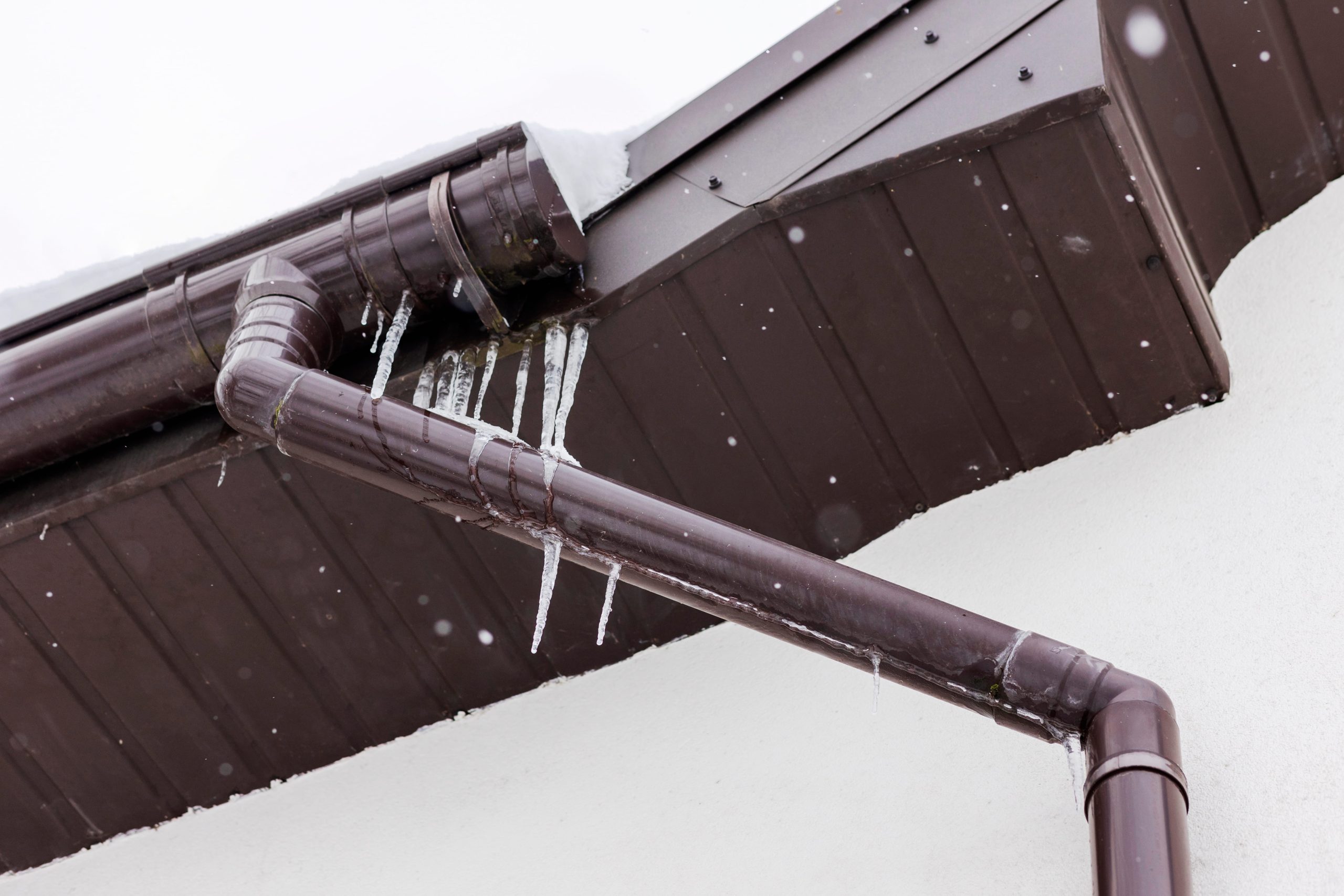
6. Ice and Water Damage in Seasonal Climates
In colder climates, ice dams and freezing water create additional gutter stress.
What happens:
- Water freezes inside gutters
- Ice blocks normal drainage flow
- Meltwater overflows onto roof edges
- Repeated freeze-thaw cycles weaken gutter structure
Foundation impact:
When ice melts, large volumes of water are suddenly released near the home, overwhelming soil absorption capacity.
Even in milder climates, sudden cold snaps can cause similar issues.
Early Signs of Foundation Damage Caused by Gutter Problems
Foundation damage develops slowly, but there are warning signs homeowners should never ignore.
Inside the home:
- Cracks in drywall near doors or windows
- Doors that stick or don’t close properly
- Uneven floors or sloping surfaces
- Gaps between walls and ceilings
Outside the home:
- Visible cracks in foundation walls
- Soil pulling away from the foundation
- Pooling water near the base of the house
- Landscaping erosion near downspouts
These symptoms often indicate that water is not being managed properly around the home.
How to Prevent Gutter-Related Foundation Damage
The good news is that most gutter-related foundation issues are completely preventable with regular maintenance and a few smart upgrades.
1. Clean Gutters Regularly
Routine cleaning is the simplest and most effective prevention step.
Recommended schedule:
- At least twice a year (spring and fall)
- More often if surrounded by trees
Benefits:
- Prevents blockages
- Maintains proper water flow
- Reduces overflow risk
2. Install Gutter Guards
Gutter guards help reduce debris buildup.
They help by:
- Blocking leaves and large debris
- Reducing cleaning frequency
- Improving long-term flow efficiency
While not maintenance-free, they significantly reduce clogging risks.
3. Extend Downspouts Properly
Downspout extensions are one of the most effective ways to protect your foundation.
Best practices:
- Extend water at least several feet away from the home
- Ensure water drains downhill away from structure
- Use splash blocks or buried drainage systems if needed
4. Inspect Gutters After Storms
Storms often cause hidden damage.
What to check:
- Sagging sections
- New leaks or cracks
- Overflow signs
- Loose brackets
Catching damage early prevents long-term issues.
5. Ensure Proper Gutter Slope
Gutters should always have a slight downward pitch toward downspouts.
If water pools in sections, adjustments may be needed to restore proper flow.
6. Maintain Proper Landscaping Grading
Even a perfect gutter system can fail if the ground around your home slopes inward.
Ideal grading:
- Soil should slope away from the foundation
- No water should collect near exterior walls
- Drainage paths should be clear
7. Schedule Professional Roof and Gutter Inspections
Professional inspections help identify issues homeowners often miss, such as:
- Hidden leaks
- Improper installation
- Early signs of structural stress
- Drainage inefficiencies
Annual inspections are especially important in areas with heavy rainfall or seasonal storms.
Final Thoughts
Gutters may seem like a minor part of your home’s structure, but they play a major role in protecting your foundation. When they fail—whether through clogs, poor design, leaks, or improper drainage—the effects can quietly spread beneath the surface until serious structural damage appears.
The key takeaway is simple: water should always move away from your home, not toward it. With regular maintenance, proper installation, and attention to early warning signs, homeowners can prevent expensive foundation repairs and keep their homes structurally sound for years to come.