
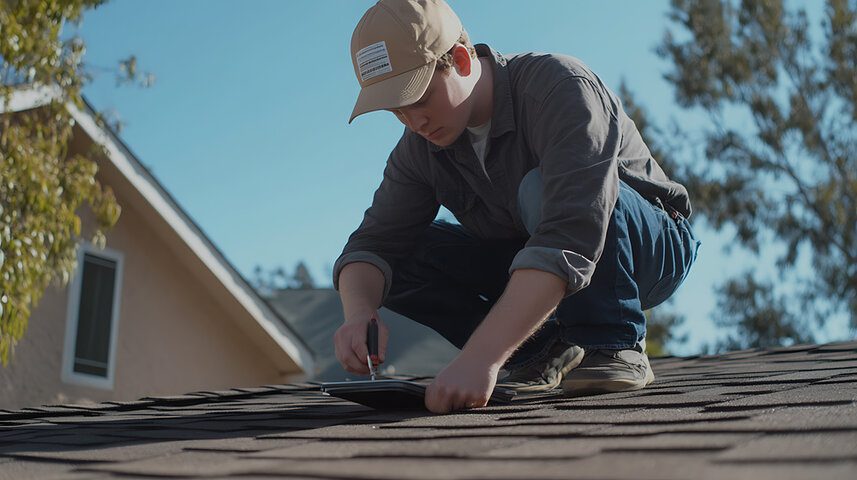
Selecting the right roofing partner for a commercial construction project is a major decision. Developers and general contractors in Brownstown, MI often search for “Roofing Contractor Questions in Brownstown, MI” because the right questions early in the bidding process can protect budgets, schedules, and long-term building performance.
While Kincaid Construction Company is a specialized commercial framing and rough carpentry contractor serving Southern California, we work closely with roofing trades on large-scale multi-family, hospitality, and commercial builds. Our experience coordinating structural wood framing with roofing systems gives us a unique perspective on what developers should ask before awarding a contract.
In this guide, we break down the most important questions to ask roofing contractors, how those questions impact structural framing, and what commercial project stakeholders should consider to ensure long-term success.
Key Questions for Brownstown Roofers Before Hiring
Hiring a roofing contractor for a commercial project in Brownstown, Michigan requires more than reviewing price proposals. Commercial roofs interact directly with structural framing systems, drainage design, mechanical penetrations, and energy performance requirements. Asking strategic questions upfront helps reduce costly change orders and construction delays.
When evaluating roofing contractors in areas such as Brownstown and nearby communities like Trenton or Woodhaven, it’s important to understand how their work will integrate with the structural scope. From our perspective as a commercial framing contractor, roofing and framing alignment is critical for large-scale developments.
Before signing a contract, consider asking the following:
- What types of commercial roofing systems do you specialize in?
- How do you coordinate with structural framing teams during installation?
- What is your experience with multi-family or mixed-use developments?
- Can you provide recent project references of similar size and scope?
- How do you manage weather-related scheduling risks in Michigan?
These questions go beyond surface-level qualifications. They open the door to meaningful conversations about sequencing, material compatibility, and structural load considerations.
Another key area involves communication. Roofing contractors must coordinate closely with general contractors, framing crews, and mechanical trades. Miscommunication can result in improper flashing, framing modifications, or unplanned penetrations through structural members.
Developers should also ask about:
- On-site supervision and project management structure
- Subcontractor usage versus self-performing crews
- Safety protocols and OSHA compliance records
- Inspection and quality control processes
By addressing these topics early, project teams reduce uncertainty and create a stronger foundation for collaboration throughout the build.
Finally, it is wise to evaluate long-term reliability. Roofing systems are a significant investment, and performance failures can impact structural framing and interior finishes. Asking detailed questions before hiring protects both immediate construction goals and long-term asset value.
What to Ask a Commercial Roofing Contractor
Commercial roofing differs significantly from residential roofing. Systems are larger, more complex, and often integrated with mechanical units, solar arrays, and advanced insulation assemblies. In cities like Brownstown, where seasonal weather variations are significant, durability and drainage performance are especially important.
When working on multi-family and commercial developments, framing contractors like Kincaid Construction Company must ensure that roof loads and connection details align precisely with design documents. That makes it essential for roofing contractors to demonstrate technical expertise.
Key technical questions include:
- What roofing systems do you recommend for large commercial buildings?
- How do you calculate and manage roof load distribution?
- What insulation and vapor barrier systems do you use?
- How do you handle roof penetrations for HVAC and plumbing?
- What is your process for ensuring proper drainage design?
Each of these questions ties directly into structural framing coordination. For example, improper load distribution can affect truss performance or engineered lumber systems. In large-scale builds, even minor miscalculations can have significant downstream consequences.
It’s also important to ask about project scalability. Commercial developments often span multiple phases or buildings. The roofing contractor must have sufficient manpower, equipment, and logistical capability to keep pace with framing and structural progress.
Developers should confirm:
- Crew size and scalability for large developments
- Experience working under tight commercial deadlines
- Familiarity with municipal inspection processes
- Ability to coordinate with framing and rough carpentry trades
In Southeast Michigan markets like Brownstown, commercial projects may also face strict inspection timelines. Roofing contractors must be prepared to pass inspections without causing framing rework or schedule shifts.
Although Kincaid Construction Company serves Southern California, the same principles apply across regions. Effective coordination between structural wood framing teams and roofing contractors is essential for delivering durable, high-performance commercial buildings.
Licensing and Insurance Questions to Ask
Licensing and insurance are fundamental considerations when hiring a roofing contractor in Brownstown, MI. Commercial construction carries significant liability exposure, and all subcontractors must meet strict compliance standards.
Before moving forward, confirm that the roofing contractor holds appropriate state and local licenses. Licensing demonstrates baseline qualifications and compliance with industry regulations. It also helps ensure the contractor understands regional building codes.
Important verification questions include:
- Are you properly licensed to perform commercial roofing in Michigan?
- Can you provide proof of general liability insurance?
- Do you carry workers’ compensation coverage?
- Are your subcontractors insured and vetted?
- Have you faced any recent legal or compliance issues?
Requesting documentation rather than verbal assurances protects project stakeholders. For large commercial builds, documentation should be reviewed before mobilization begins.
Insurance coverage is particularly important when roofing work overlaps with structural framing. Roofing installation often involves working at heights, using heavy materials, and coordinating around partially completed framing systems. Adequate coverage protects developers and general contractors from unnecessary risk.
You should also ask about:
- Bonding capacity for large commercial projects
- Safety training programs for field crews
- OSHA compliance history
- Claims history over the past five years
These details provide insight into operational stability and risk management practices.
Even though Kincaid Construction Company operates in Southern California, we apply the same rigorous standards when partnering with roofing trades. Proper licensing and insurance create a safer environment for framing teams and protect the overall project from legal and financial exposure.
Experience With Large Michigan Builds Today
Commercial roofing contractors in Brownstown should demonstrate proven experience with large, complex builds. Multi-family housing, hospitality developments, and mixed-use projects require coordination with framing, mechanical, electrical, and plumbing trades.
Experience matters because large-scale projects involve:
- Complex structural roof geometries
- Engineered truss systems and load-bearing walls
- Integrated drainage and waterproofing assemblies
- Tight sequencing between framing and roofing crews
Roofing contractors without large-project experience may struggle with scheduling and coordination demands.
Ask potential contractors to provide detailed case studies. Instead of simply reviewing a photo gallery, request project summaries that include square footage, system types, timeline performance, and any challenges encountered.
Important evaluation points include:
- Experience with multi-building developments
- Knowledge of cold-weather installation practices
- Familiarity with commercial inspection processes
- Ability to manage high-volume material deliveries
Brownstown, MI 48183 and surrounding areas experience weather patterns that can impact installation timelines. Contractors must demonstrate strategies for maintaining quality despite temperature fluctuations and seasonal challenges.
From a framing contractor’s perspective, roofing delays can stall interior progress and extend overall construction timelines. Choosing a contractor with demonstrated experience in large Michigan builds reduces risk and supports efficient project completion.
At Kincaid Construction Company, serving Southern California developers and builders, we prioritize partnerships with trades that understand large-scale structural coordination. Experience on substantial projects translates directly into smoother execution.
Timelines and Coordination With Framing Teams
Roofing installation must align precisely with framing completion milestones. If roofing crews mobilize too early, structural adjustments may be required. If they mobilize too late, interior trades may be delayed due to exposure risks.
Developers in Brownstown should ask roofing contractors how they coordinate with framing teams. Clear scheduling communication is essential for large commercial projects.
Key coordination questions include:
- How do you align roofing schedules with framing milestones?
- What is your process for addressing framing modifications?
- How do you manage material staging on active job sites?
- Who is responsible for daily coordination meetings?
- How do you handle unexpected structural changes?
Roofing and framing teams must collaborate closely when installing sheathing, underlayment, and edge detailing. Poor communication can result in rework, added labor costs, and delays.
Effective coordination includes:
- Weekly progress meetings with framing supervisors
- Shared construction schedules with real-time updates
- Clear documentation of structural penetrations
- Defined responsibility for flashing and edge transitions
For large developments in Brownstown and surrounding Southeast Michigan communities, sequencing becomes even more complex when multiple buildings are under construction simultaneously.
Although Kincaid Construction Company serves Southern California markets, we consistently emphasize early trade coordination on multi-family and hospitality projects. Roofing contractors who understand structural framing dependencies help ensure smooth transitions between construction phases.
Warranty and Quality Assurance Details Explained
Commercial roofing systems represent a long-term investment. Warranty terms and quality assurance processes should be carefully reviewed before awarding a contract in Brownstown, MI.
Warranties vary significantly depending on the roofing system, manufacturer, and installation practices. Developers should request detailed documentation outlining coverage terms and exclusions.
Critical warranty questions include:
- What is the duration of the material warranty?
- Is there a separate workmanship warranty?
- What conditions could void the warranty?
- Are manufacturer inspections required?
- How are warranty claims handled?
Understanding these details protects building owners from unexpected repair costs.
Quality assurance is equally important. Roofing systems must be installed according to manufacturer specifications to ensure performance. That often requires inspections, documentation, and strict adherence to approved methods.
Ask about:
- On-site quality control supervisors
- Inspection checkpoints during installation
- Manufacturer-certified installer status
- Post-installation testing procedures
In areas like Brownstown, MI 48134 and nearby communities, freeze-thaw cycles and precipitation levels make proper installation even more critical. Small installation errors can lead to leaks, insulation damage, and structural framing exposure.
As a commercial framing contractor serving Southern California, Kincaid Construction Company understands how roofing quality directly impacts structural longevity. Strong warranties backed by disciplined quality assurance processes provide peace of mind for developers, general contractors, and property owners alike.
Frequently Asked Questions
What does a commercial framing contractor do on large construction projects?
A commercial framing contractor is responsible for constructing the structural wood framework of a building, including load-bearing walls, floor systems, and roof framing assemblies. Kincaid Construction Company serving Southern California provides structural wood framing and rough carpentry for multi-family, hospitality, and commercial developments, ensuring that buildings are constructed according to engineered plans and local code requirements.
How does rough carpentry differ from finish carpentry in commercial construction?
Rough carpentry focuses on structural components such as framing, sheathing, blocking, and subfloors that form the building’s framework. Finish carpentry involves detailed aesthetic elements like trim and cabinetry. On large Southern California projects, Kincaid Construction Company specializes in rough carpentry, ensuring structural integrity before interior finishes are installed.
How long does structural wood framing take on a multi-family project?
Framing timelines depend on project size, design complexity, weather conditions, and trade coordination. A large multi-family development in Southern California may require several weeks to several months for structural framing. Kincaid Construction Company works closely with general contractors to maintain efficient schedules and adapt to evolving construction phases without compromising quality.
Why is coordination between roofing and framing contractors important?
Roofing systems depend on accurate structural framing for proper load distribution and drainage performance. Misalignment can lead to leaks, structural stress, or inspection failures. Kincaid Construction Company serving Southern California prioritizes early coordination with roofing contractors to ensure framing assemblies support long-term building performance.
What types of wood framing systems are used in large commercial buildings?
Large commercial projects commonly use engineered lumber, prefabricated trusses, and dimensional lumber systems. These materials are selected based on load requirements and architectural design. Kincaid Construction Company in Southern California works with developers and engineers to implement framing systems that meet structural demands while supporting efficient installation.
How do framing contractors help maintain construction schedules?
Framing contractors play a central role in advancing a building from foundation to enclosed structure. Timely framing allows roofing, mechanical, and interior trades to begin work as scheduled. Kincaid Construction Company serving Southern California emphasizes precise sequencing, workforce scalability, and proactive communication to keep commercial projects moving forward.
What should developers look for when hiring a commercial framing subcontractor?
Developers should evaluate experience with similar project types, safety records, licensing, workforce capacity, and coordination practices. Kincaid Construction Company supports Southern California builders with scalable framing solutions tailored to multi-family, hospitality, and commercial developments, ensuring structural precision and dependable performance.
Can commercial framing contractors scale for large multi-building developments?
Yes, experienced commercial framing contractors can scale crews and resources to support multi-building or phased developments. Kincaid Construction Company serving Southern California delivers structural wood framing solutions designed to meet the demands of large-scale construction projects without sacrificing quality or timeline performance.